Below is the detailed breakdown of the Rwanda packing list.
Essential Clothing to Wear

Many times, travelers pack clothes that make them feel uncomfortable on their safari. It’s crucial to know what to pack for a comfortable safari in Rwanda, including:
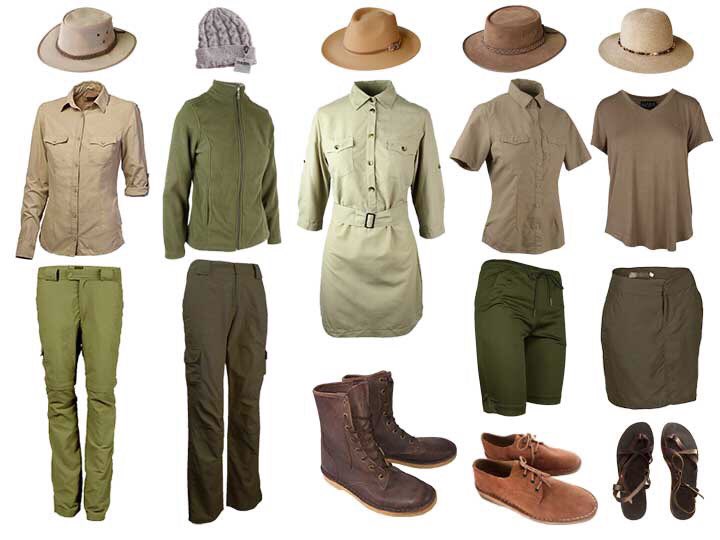
Long-Sleeved Shirts and Trousers
Long-sleeved shirts and trousers are considered the best clothing for field activities like gorilla trekking, game drives, nature walks, and volcanic hiking, among others.
Long dresses and shirts are also ideal for community tours, worship centers, and other public places. It is always advisable to dress modestly since the Rwandan culture requires one to do so.
Waterproof Rain Jacket and Pants
Rwandan weather is sometimes unpredictable, so it is advisable to carry a waterproof rain jacket and pants to keep you dry on a rainy day.
Swimwear
Please remember to pack swimsuits if you are planning to visit beaches or a swimming pool.
Garden Gloves
Garden gloves are a must-pack for gripping vegetation while hiking, especially during activities like gorilla trekking, golden monkey tracking, and others.
Footwear
What you wear on your feet during a safari matters just as much as anything else, and these types should be packed.
Sturdy, Broken-In Hiking Boots
These provide ankle support and traction on steep, muddy, and uneven terrain during gorilla trekking and other activities.
Sandals/Light Shoes
Since not all the time is spent trekking, you should pack sandals or light shoes for evenings and early mornings before you embark on the busy safari activities in the fields.
Woolen Socks
Long woolen socks are excellent for tucking into your trousers to prevent insect bites and tick attachment while in the field.
Top Gear and Equipment
Waterproof Daypack
This is a smaller and lightweight bag that you can use for your daily activities, and it can be used for carrying your water, snacks, rain jacket, camera, binoculars, and other equipment.
Binoculars
Binoculars are among the crucial items to pack for a Rwanda safari. When you are planning to buy one, opt for a lightweight and waterproof model with high magnification.
A quality pair of binoculars will transform distant wildlife sightings into intimate encounters. Binoculars are mostly used when on Rwanda birding tours.
Camera
Pack a high-quality dust-resistant camera with a powerful zoom lens for capturing intriguing wildlife moments. You should also bring along extra batteries, a memory card, or a flash disk.
Power Bank/Portable Charger
Packing a power bank and a portable charger with at least 10,000 to 20,000mAh to ensure that your phone and cameras stay charged during long days of trekking and game drives
Reusable Water Bottle
To stay hydrated during the 2-8-hour treks, it is recommended to carry a reusable water bottle together with water filters (e.g., purification tablets) to refill from natural sources.
Headlamp/Flashlight
You should carry a flashlight for evening use in the lodges and for safety when navigating Unity trails, camping areas, or during unexpected power outages. A flashlight is also essential for spotting wildlife around the camps or signaling for help in emergencies.
Hat And Sunglasses
The weather in Rwanda is unpredictable; sometimes it is very hot, and you will need to come along with a hat for protection against scorching sun and sunglasses from direct sun rays.
Toiletries And Health Equipment
It is advisable to pack biodegradable toiletries that minimize environmental impact. These include:
High-DEET Insect Repellent
High-DEET insect repellent (30–50% concentration) is essential for a Rwanda safari to protect against malaria-carrying mosquitoes, tsetse flies, and other insects in forested areas. The repellent is applied to exposed skin, ankles, and wrists in the morning or evening.
Sunscreen and SPF Lip Balm
Sunscreen and SPF Lip Balm are essential for protecting you from equatorial sunlight and dry winds.
These prevent painful sunburn and, during long, open, and top-open game drives, among other activities, ensure you stay comfortable.
Other Personal Belongings
You can pack other items for personal grooming, and these may include soap, hair shampoo, skin cream, hair oil, nail clips, sanitary wear, body creams, and toilet paper, among others.
First Aid Kit
A comprehensive personal first aid kit is essential when on any safari in Rwanda to treat minor injuries from insect bites and tropical illnesses like malaria.
Items in the kit may include bandages, painkillers, antiseptic wipes/spray, sterile gauze pads, medical tape, and hand sanitizer, among others.
Documents And Money
For tourists to enter and have access to different travel destinations, documentation is key, and it is advisable to have both the original and soft copies.
Here are the documents and currencies you need for a Rwanda safari.
- Passport and Visa: You need an original passport that is valid for at least six months, along with a valid Rwandan visa.
In case you plan to do more safaris in Uganda or Kenya, then you should obtain the East Africa Tourist Visa.
- Permits and Bookings: Carry physical copies of tracking permits (gorilla/chimps) and flight tickets
- Travel insurance policies: You should have proof of insurance covering medical emergencies and evacuation.
- Yellow Fever Certificate and any required COVID-19 documentation.
Money (Cash and Cards)
- US Dollars (clean, crisp, non-torn bills dated 2009 or later) are accepted for tips and larger purchases.
- Rwandan Francs are often used for smaller and local purchases.
Important Tips for a Rwanda safari
Communication advice
- No Plastic: Rwanda has a strict ban on single-use plastic bags. So, as you pack things to use on a safari, you should be mindful since the law is enforced at airport customs, where luggage is scanned, and items are confiscated.
- Hire A Porter: Hire local porters for trekking to help with bags and steep terrain to ease your wildlife safari experience.
- Laundry: Many lodges offer quick laundry services, allowing you to pack lighter.
- Stay Inside the Vehicle: In wildlife areas like Akagera National Park, you are required to stay inside the vehicle except at the designated spots and adhere to the speed limit.
What Is the Best Time to Go for A Rwanda Safari?
The best time to visit Rwanda is during the dry season (June and September or December and February). This time offers more ideal conditions for trekking and other wildlife activities, as the trails are more accessible, allowing entry into the different Rwanda national parks.
During this period, the vegetation also withers, making wildlife spotting easy, and many of them tend to gather around water sources.
How To Get to Rwanda for A Safari?
Rwanda can be accessed by both air and by road.
By Air
By air, visitors fly into Kigali International Airport (KGL) using carriers like RwandAir, Ethiopian Airlines, Kenya Airways, and many more.
For further transfers, Akagera Aviation offers chartered helicopter transfers to Akagera National Park, avoiding longer road trips.
By Road
If you’re traveling by road, you can hop on an international bus, hire a private 4×4, or arrange a transfer through a safari company.
Common Border Crossings Include:
- From Uganda: Use the Gatuna (Katuna) border via Kabale or the Cyanika border via Kisoro.
- From Tanzania: Cross at the Rusumo border.
- From Burundi: Use the Ruzizi or Ruhwa crossings.
- From the DR Congo: Cross via the Goma border.
Rwanda Safari Packing List FAQs (Frequently Asked Questions)
What Should I Wear for Gorilla Trekking?
For a comfortable gorilla trekking experience, you will wear long trousers and long-sleeved shirts to protect against insects and stinging plants, plus waterproof hiking boots for steep, muddy hills.
What Type of Rain Gear Is Required?
Some of the rain gear to carry for a Rwandan holiday includes waterproof hiking boots, a waterproof rain jacket (with a hood), and waterproof trousers, which are essential. However, much of Rwanda is generally sunny, and showers can occur suddenly.
Are Plastic Bags Allowed in Rwanda?
The Rwandan law forbids single-use plastic shopping bags, and if found, they will be confiscated at the airport. Ziploc bags are allowed only if they are for reusable, personal packing and kept in their original packaging.
What Is the Dress Code in Rwanda?
Rwanda has a tradition of modesty in villages and most parts of the country, so it is advised to wear clothing that covers the shoulders and pants/skirts that go below the knee.
Now that you know exactly what to pack, you’re ready for the exciting part: booking your Rwanda safari. Select your dates, choose your desired itinerary, and prepare for unforgettable views and incredible wildlife encounters.
 >
>